
Designing for families: the art of family centred hospitality
- James Hacon

- May 27
- 6 min read
I’ve just returned from a few days away with the family at Auchrannie Resort on the Isle of Arran, off Scotland’s west coast.
For those who only know me through strategy decks and development plans, I have a six year old son, a four year old daughter and a wife who deserves recognition for travelling as much as we do. We move often. Fifteen countries so far for the children. Hotels, resorts, cruise ships, ski lodges, beach escapes. All in the name of research, of course.
It felt like the right moment to write my first proper Substack. Not about brand homes or mixed use masterplans, but about family travel. The best, the worst and the painfully average. And how it connects to my early career in family resorts and more recently, to the projects we lead at Think Hospitality where family experience is commercial strategy, not an afterthought.
The Early Lesson: Children Drive Decisions
In my teens and twenties I did the full circuit of family tourism, growing up in Great Yarmouth and then Cornwall, it was in my destiny.
Leisure assistant at Haven working arcades and go karts.
F&B supervisor on Tresco Island serving timeshare families who knew exactly what they had paid for.
Roles at Gleneagles, which remains exceptional at balancing polish with play for wealthy families.
Overseas rep for First Choice Holidays in Lanzarote running a Holiday Village built entirely around families.
One truth was obvious early on. Children drive decisions. They influence the booking and they certainly dictate the mood once you arrive.
The Thaikhun Study
During my time as Brand Strategy Director at Thai Leisure Group we were strong with families but wanted to lead the market. We partnered with a Telegraph parenting journalist and ran focus groups with children alongside detailed interviews with parents.
Three insights dominated.
Parents are anxious about disrupting other diners. Speed matters. Getting food and activity to the table quickly is emotional insurance.
Children want to be adventurous. Parents cannot risk the meltdown that follows a failed experiment.
Dining out is precious family time. It is not just refuelling.
This led to a full rethink of the kids proposition at Thaikhun.
We introduced a mix and match format. Rice or noodles. A protein. Sauces served separately. Children could experiment safely, knowing they could retreat to plain rice if necessary. Culinary bravery with a safety net.
We partnered with Nat Geo Kids to produce a Thailand themed activity booklet layered by age group, not just colouring sheets. Carrot and cucumber sticks landed immediately on arrival. Calm children. Calmer parents.
The result was a 500 percent increase in kids dining from an already strong base. A strong proposition amplified by influencer and PR activity.
What We Know Now
Fast forward to today and the lens is sharper.
That campaign eight years ago gave us a strong commercial foundation, but our more recent work at Think Hospitality has allowed us to get properly under the skin of family dining behaviour. Not least through Claire Scullion, our behavioural psychologist and menu scientist, and Laura Vana, our Chief of Staff, whose Masters focused on children’s nutrition and dining behaviour and who later delivered a compelling TED talk on the subject.
Across recent projects including Crieff Hydro, one of Scotland’s leading family resorts, and a major international five star hotel group, we have observed an evolution in parental mindset.
The anxiety about disruption remains. The need for speed remains. But layered on top is something more intentional.
Parents are increasingly concerned about reducing screen time. They are more protective of genuine, shared family moments. Nutrition has moved from background consideration to active scrutiny, particularly around ultra processed foods. The bar has quietly risen.
Laura’s research demonstrated that “safe” options still matter. Familiarity provides reassurance for both parent and child, particularly in unfamiliar environments. However safe does not need to mean simplistic or nutritionally compromised. Those options must be nourishing in their own right and sit alongside more interesting, developmentally appropriate choices, especially for older children who are forming independent tastes and identities.
The opportunity is not to remove the safety net. It is to make the safety net better.
Under 8s
The parent is the decision maker. Often because the child cannot read fluently. Parents are choosing for themselves and multiple children at once. Simplicity wins. Set pricing reduces anxiety. Value perception matters because parents assume some of the plate may return untouched.
Happy child. Calm parent. Efficient service.
Over 8s
Children want agency. They want a proper menu. Older children increasingly want the adult experience which creates financial pressure and nutritional tension. Adult dishes are often too calorific and too salty.
What performs well in testing:
Dedicated older children menus.
Half portions clearly marked on the main menu, ensuring appropriate sized portions for the age group.
There is also rising parental concern around reduced screen time, genuine family connection and ultra processed foods.
Safe options still matter. They simply need to be nourishing and thoughtfully executed rather than beige placeholders.
Auchrannie Resort: A Welcome Surprise
If I am honest, I approach the four star Scottish market cautiously. Too often I’ve encountered tired assets, under trained teams and faded ambition. A recent stay at Macdonald Aviemore Resort felt like a live tribute to Fawlty Towers.
Auchrannie Resort was the opposite.
Two and a half hours door to door for us. Ferry arrivals create predictable check in peaks. They anticipated it. Extra lobby stations. A text when the room was ready early. Friction removed.
The room design was ideal for families. Super king bed and a small adjoining bunk room. Flexible enough for the inevitable 3am migration.
Staff were warm and genuinely engaging with the children. Not performative. Natural. Impressive given many were seasonal. It’s clear that there is a strong culture and sense of cohesion among the team.
Two restaurants. Good kids menus. One with an adjacent soft play room which, I can confirm, meaningfully increases wine sales (a beautiful Saint-Émilion).
If I had one critique, breakfast felt slightly dated and under focused on children. A refresh would elevate the experience further. If this interests you, check out the extensive Breakfast Whitepaper we wrote last year.

Royal Caribbean: Scale Done Well
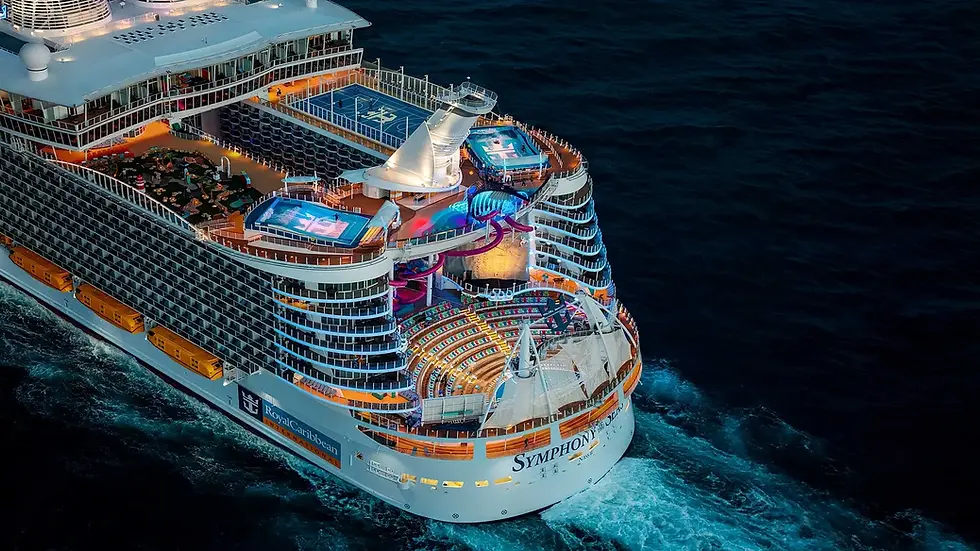
Last October half term we cruised from New York to the Bahamas with Royal Caribbean.
After a disappointing experience with P&O the previous year we hesitated. We really shouldn’t have.
To P&O’s credit, their kids club space was stronger and more structured. However Royal Caribbean outperformed for families across the wider experience.
Why?
A broader visible range of family activities.
Stronger splash zones and slides.
Shows better aligned to children.
Consistent warmth towards kids onboard.
Layered surprise and delight moments. Parades. Pop up fairground style activations. Energy. Everyone enjoys something extra.
Other Standouts
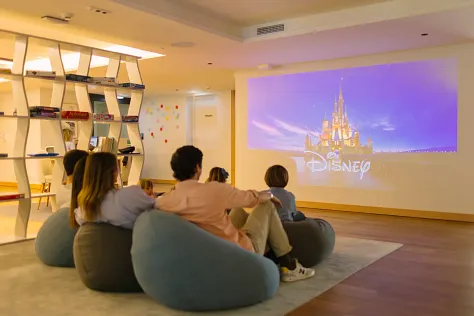
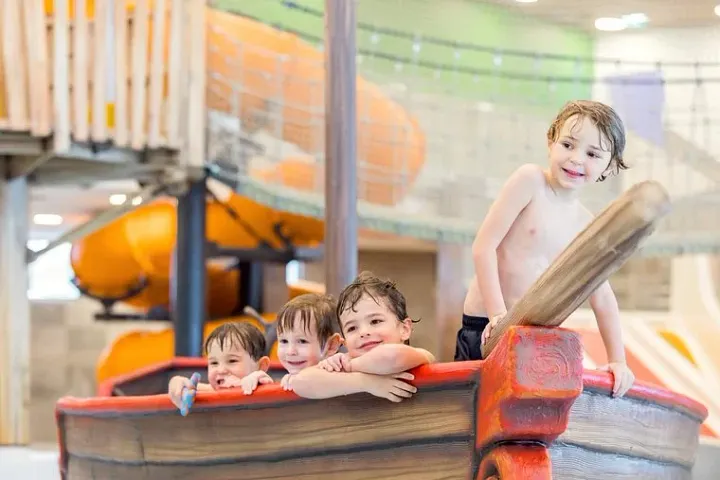
Zugspitz Resort in the Austrian Tyrol was excellent. Beautiful adult-designed spaces alongside one of the largest soft play zones I have seen in a hotel. Separate adult and family swimming areas and a mini waterpark that delivered genuine joy.
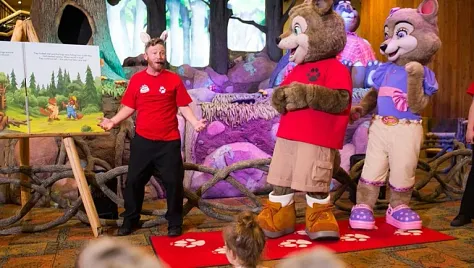
Great Wolf Lodge in the US and Canada remains a masterclass in immersive family experience. A vast indoor waterpark wrapped in animatronic forest theatre. Morning yoga to bedtime story time. We are returning for a fourth visit this Christmas.
The only downside is that the food requires serious elevation, particularly if their UK opening is to succeed. British families will expect more.
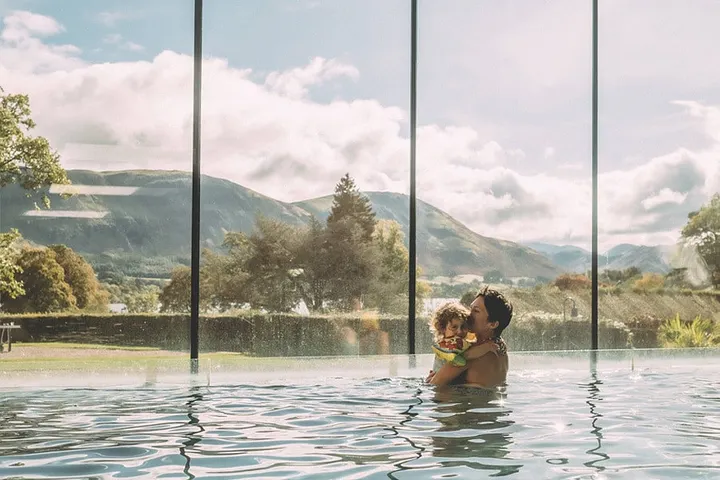
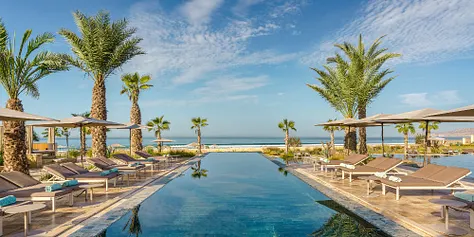
Other strong performers include Fairmont Taghazout Bay in Morocco, Hilton Dalaman in Türkiye, Martinhal Lisbon with its booster seats and children’s dressing gowns and Another Place in the Lake District, a four-star operator using family distinction as competitive advantage, that without it could easily get lost in the myriad of choice in the crowded country house market in the Lakes.


Where Many Hotels Still Get It Wrong
Mainstream hotels often treat children as logistical complications.
The offer becomes a generic kids menu, a put up bed and a tired kids room with broken toys.
Children are spoken over rather than spoken to.
Families feel tolerated rather than welcomed.
Fast or Fabulous
If I had to summarise what makes a family stay work, it is this.
Be fast or be fabulous.
If families are not your strategic focus, prioritise frictionless efficiency.
Fast check in.
Recognise children in the lobby.
Ensure extra beds actually arrive and are set-up.
Train teams to acknowledge children directly.
Deliver a kids menu that is beyond beige.
If you want to win the category:
Create two tier family menus for under eights and over eights.
Add kids toiletries and pint-sized dressing gowns.
Introduce lower buffet sections at breakfast.
Offer dedicated family check in and thoughtful room design with bunk solutions.
Provide smaller toilets and lower sinks in public areas.
Offer early breakfast and high tea options.
Use booster seats and sensible glassware.
Programme for families. Think family yoga, campfires and bedtime stories.
Design safe balconies and practical bathrooms.
Allocate separate swim times for families and adults.
And always build in moments of surprise.
Children remember the marshmallow moment far longer than the thread count.
Parents, meanwhile, want to enjoy their trip as adults, not just as supervisors of logistics. They have not booked a break to referee, organise and negotiate meal choices in a different postcode. They want good food, a glass of wine that is not hurried, design that feels considered and moments that carry a sense of aspiration.
The real magic of family centred hospitality is not overwhelming children at the expense of adults. It is creating an environment where both can thrive at the same time. Where children are engaged and delighted, and parents feel seen as guests in their own right.
When that balance is struck, the stay does not simply function. It becomes memory.


Comments